


Cows Get Invisible Boundaries
Virtual fencing is moving from ranch-tech novelty to public-lands tool, which is great news for anyone who has ever priced a fence and then quietly stared into the distance.
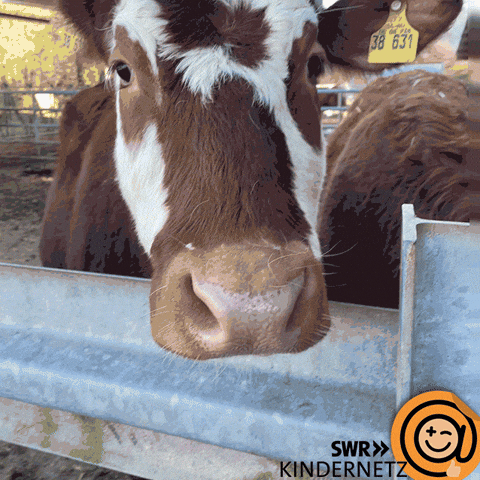
No posts required: Halter and the Foundation for America's Public Lands are expanding virtual fencing on BLM-managed grazing land, with nearly $3 million committed across 15 projects, more than 4,500 cattle collared and over 1,300 miles of virtual fence drawn. The solar-powered collars use GPS and sound cues to help move livestock without building every boundary in steel.
Public land puzzle: BLM manages livestock grazing across about 155 million acres of public land. New projects in New Mexico and Wyoming are aimed at flexible grazing, drought response and keeping cattle out of sensitive areas. Satellite-connected collars can also work where cell service has gone to live with Bigfoot.
The wrinkle: The invisible fence still leaves a visible data trail. Ranchers have raised concerns that real-time collar data could be used to identify stray cattle, pursue trespass claims, rescind leases, change permit conditions or trigger FOIA fights. Nobody wants a grazing plan to become a cow location spreadsheet with legal shoes on.
Why it matters: Virtual fencing could save time, protect range and reduce physical fence costs. But adoption will need trust, not just signal strength. Nobody wants a cow collar becoming a federal group chat with hooves.



Comments